• 2026.11.11 (Wed)
  • All articles
  • LOGIN
  • JOIN
Global Economic Times
[등록] 2026-09-01 15:48:31
  • Synthesis
  • World
  • Business
  • Industry
  • ICT
  • Distribution Economy
  • Well+Being
    • Pet Life
    • Halal Horizon
  • Travel
  • Eco-News
  • Education
  • Korean Wave News
  • Opinion
  • Arts&Culture
  • Sports
  • People & Life
    • International Student Report
    • With Ambassador
  • Column
    • Cho Kijo Column
    • Cherry Garden Story
    • Ko Yong-chul Column
    • Kim Bong-seon's Photo Column
    • Kim Seul-Ong Column
    • Lee Yeon-sil Column
  • Photo News
  • New Book Guide
MENU
 
Home > Well+Being

“14.7 Billion Particles in One Tea Bag?”: Shocking Rise of Microplastics in Brewed Tea

Eugenio Rodolfo Sanabria Reporter / Updated : 2026-04-23 22:20:11
  • -
  • +
  • Print


A cup of tea, often synonymous with health and relaxation, may actually be a "plastic cocktail." Recent comprehensive research conducted by international teams has revealed that a single tea bag can release billions of microplastic and nanoplastic particles into a single serving, raising serious alarms regarding long-term human health.

 
The Hidden Reality of the "Healthy" Brew
According to a report by the Daily Mail on the 21st (local time), a meta-analysis of 19 academic papers by researchers from Iran and the UK found that even a dry tea bag contains approximately 1.3 billion microplastic particles.

The situation worsens significantly when heat is applied. When steeped in boiling water, the number of released particles skyrockets to 14.7 billion. Experts explain that high temperatures accelerate the physical breakdown of the plastic mesh, causing it to fragment into microscopic pieces that are invisible to the naked eye.

Material Matters: Nylon and PET Under Fire
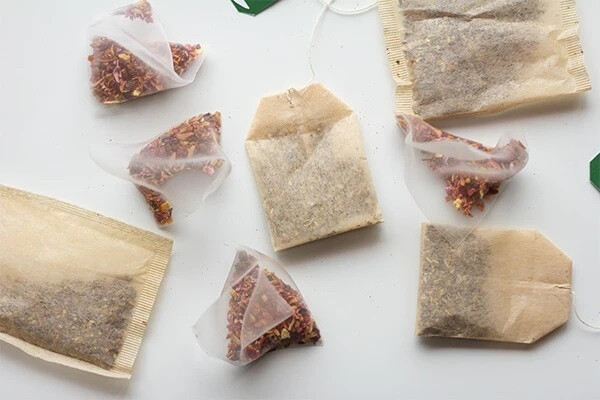
The study identified the material of the tea bag as the primary factor in contamination levels. Bags made of Nylon or PET (Polyethylene Terephthalate)—often marketed as "silky" or "premium" mesh—showed the highest rates of particle shedding when exposed to boiling water.

The researchers also noted that the contamination isn't limited to DIY brewing. Bottled tea products were also found to contain extensive levels of micro- and nanoplastics. Even products labeled as "Eco-friendly" or "Biodegradable" failed to provide a safe haven, as they too released billions of particles due to the thermal and chemical stress placed on the bag and its string during the steeping process.

The Invisible Threat to Human Organs
The primary concern lies in the size of these particles. While microplastics are roughly the width of a human hair, nanoplastics are so minute they cannot be seen with standard microscopes. These tiny invaders are capable of:

Crossing Cell Membranes: Entering the bloodstream and traveling to vital organs.
Inducing Oxidative Stress: Damaging DNA, proteins, and cellular structures.
Increasing Cancer Risks: Potentially causing long-term mutations and tumor growth.
Scientists have already detected these particles in human blood, lungs, livers, and even tumor tissues. Using a microwave to heat water with a tea bag inside was found to exacerbate this shedding even further.

 
How to Protect Yourself: Practical Solutions
Experts suggest that the most effective way to eliminate exposure is to return to traditional methods.

Switch to Loose Leaf Tea: Using a stainless steel or glass infuser with loose leaves completely removes the plastic bag from the equation.
Choose Paper Filters: If convenience is necessary, opt for unbleached paper tea bags that do not use plastic sealants.
Rinse Before Steeping: Some studies suggest that rinsing a tea bag with cold water before use can reduce the initial particle count, though this has limited effectiveness for nylon materials.
As the "plastic-free" movement gains momentum, this research serves as a stark reminder that even our most mundane habits may require a second look for the sake of our cellular health.

[Copyright (c) Global Economic Times. All Rights Reserved.]

  • #Hormuz Impasse
  • #globaleconomictimes
  • #micorea
  • #mykorea
  • #nammidonganews
  • #singaporenewsk
  • #Samsung
  • #Daewoo
  • #Hyos
Eugenio Rodolfo Sanabria Reporter

Popular articles

  • Nearly 900 Schools Temporarily Closed as 'Flu' Epidemic Sweeps Japan

  • AI Companies Rush to Go Public, But Face Sudden Brakes Amid Cooling Investor Sentiment

  • Global Oil Prices Spike as Geopolitical Tensions Disrupt Supplies; Brent Reaches $110

I like it
Share
  • Facebook
  • X
  • Kakaotalk
  • LINE
  • BAND
  • NAVER
  • https://www.globaleconomictimes.kr/article/1065619145932151 Copy URL copied.
Comments >

Comments 0

Weekly Hot Issue

  • Inha University Caught in Campus Culture Clash Over Proposed Rhee Syng-man Statue Revival
  • Honoring a Legacy: Poet Oh Dong-chun Recognized for Lifelong Dedication to Hangul and Sijo Poetry
  • Bongeunsa Temple to Host 2026 Patriotic Buddhism Cultural Festa
  • South Korea Confronts a Growing Health Crisis as Adult Obesity Rates Surge
  • Pain of Chosei Coal Mine Meets Japanese Readers: Moon Young-sook Publishes Japanese Edition of 'Black Sea'
  • Beyond the Trillion-Dollar Mark: China’s Trade Surplus and the Debate Over Global Economic Dominance

Most Viewed

1
US Army Conducts Rare Temporary Burial Drills to Prepare for Worst-Case Large-Scale War Scenarios
2
World Citizens are Flying Directly to Busan... The Era of 4 Million Foreigners is Just Around the Corner
3
Eating 100g of Baechu Kimchi Daily Linked to Lower High-Cholesterol Risks
4
Meeting Christmas Early!… Busan Dessert Sales Event "Daldal The Market" Held
5
November Shopping Festival Sparks Retail War in South Korea: Where to Find the Best Deals
체리가든 스토리
nutri huevos
로타리
동포저널

Hot Issue

Jensen Huang Faces Shareholder Class Action and Leadership Scrutiny Amid Espionage Allegations Involving Former Associate

Disgraced South Korean Scientist Hwang Woo-suk Becomes UAE Citizen

Is South Korea Heading Toward France's Path? Aging Population and Fiscal Pressures Looming Ahead

Fashion Runway Show 2026

Let’s recycle the old blankets in Jeju Island’s closet instead of incinerating them.

Global Economic Times
korocamia@naver.com
CEO : LEE YEON-SIL
Publisher : KO YONG-CHUL
Registration number : Seoul, A55681
Registration Date : 2024-10-24
Youth Protection Manager: KO YONG-CHUL
Singapore Headquarters
5A Woodlands Road #11-34 The Tennery. S'677728
Korean Branch
Phone : +82(0)10 4724 5264
#304, 6 Nonhyeon-ro 111-gil, Gangnam-gu, Seoul
Copyright © Global Economic Times All Rights Reserved
  • News K
  • 반달곰 프로젝트
  • 광고문의
Search
Category
  • All articles
  • Synthesis
  • World
  • Business
  • Industry
  • ICT
  • Distribution Economy
  • Well+Being 
    • 전체
    • Pet Life
    • Halal Horizon
  • Travel
  • Eco-News
  • Education
  • Korean Wave News
  • Opinion
  • Arts&Culture
  • Sports
  • People & Life 
    • 전체
    • International Student Report
    • With Ambassador
  • Column 
    • 전체
    • Cho Kijo Column
    • Cherry Garden Story
    • Ko Yong-chul Column
    • Kim Bong-seon's Photo Column
    • Kim Seul-Ong Column
    • Lee Yeon-sil Column
  • Photo News
  • New Book Guide
  • Overseas Koreans
  • Multicultural News