

PARIS — Thales, a leading French defense and technology corporation, announced on Monday (local time) that South Korea possesses an exceptionally high level of potential in quantum technology. The company expressed its intent to actively pursue close cooperation with South Korea across scientific, industrial, and aerospace domains.
Pierre Poissant, Chief Scientific Officer and Vice President of Thales, made the remarks during an online press conference under the theme, "How Quantum Technology is Moving Out of the Laboratories."
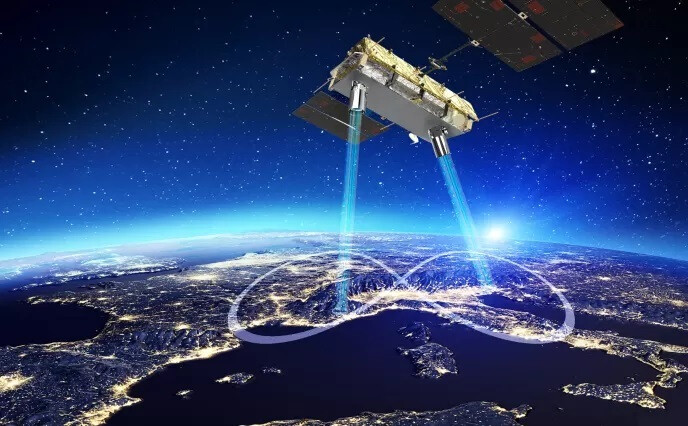
In recent years, Thales has positioned quantum computing as a core strategic sector, funneling substantial resources into its development. Last year, the company developed the world’s first anti-quantum computer hacking response program, earning official certification from France's National Cybersecurity Agency (ANSSI). Furthermore, to counter SpaceX led by Elon Musk, Thales is currently exploring the integration of space operations with European aerospace counterparts Airbus and Italy's Leonardo.
During the briefing, Thales officials emphasized that after years of rigorous research and testing, quantum technology has reached a mature stage capable of practical scalability. The so-called "Second Quantum Revolution" is projected to enhance detection, positioning, calculation, and communication performance by 10 to 1,000 times compared to conventional technologies. "Quantum technology has finally reached a level where it is truly usable in practice," Poissant noted.
The press conference drew around 40 journalists from around the globe. Responding to a press query regarding South Korea's quantum capabilities and prospects for future collaboration with South Korean government and industrial sectors, Poissant stated, "South Korea has built an ecosystem that bridges both pure science and applied industries without leaning too heavily to one side. This philosophy resonates deeply with the DNA of Thales, which values both theoretical foundations and practical execution."
Mathias Vandenbroucke, Head of Research, Technology, and Products at Thales Alenia Space, added that discussions regarding space collaboration are currently underway with South Korea. Highlighting communication security, Vandenbroucke remarked, "When SK was the major shareholder of ID Quantique (IDQ), South Korea's capabilities were remarkably advanced. There is an unmistakable presence of interest and expertise in this field within South Korea." SK Telecom and SK Square transferred their stakes in the Swiss quantum cryptography firm IDQ to the U.S. quantum computing company IonQ in exchange for IonQ shares, further accelerating their footprint in the quantum sector.
Daniel Dolfi, Head of Physics at Thales, pointed out that South Korea maintains a long-standing tradition of research into rare-earth ions. "Through academic exchanges with the École Normale Supérieure Paris-Saclay, we have continuously collaborated with South Korean academia and industry," Dolfi said, noting that Thales has recently established scholarship programs at the Korea Advanced Institute of Science and Technology (KAIST) and Jeonbuk National University.
Thales employs approximately 100 quantum specialists and files roughly 20 quantum-related patents annually. Poissant explained that rather than manufacturing quantum computers directly, Thales acts as an "integrator," combining quantum algorithms, performance evaluation, cryogenics, photonics, and integrated electronics to deploy actual defense and aerospace equipment.
During the conference, Thales projected that quantum sensors will achieve industrialization within five to 10 years, with fully functional 3-axis cold-atom inertial navigation systems—capable of operating independently of satellite navigation signals such as GPS—projected to debut around 2035. Quantum sensors are anticipated to improve radar, drone, and naval mine detection capabilities, alongside driving advancements in Alzheimer's research, dynamic medical imaging, new material development, and logistics optimization.
Poissant defined quantum technology as a matter of "sovereignty, security, and competitiveness." While the United States expands its quantum industry through massive private investment and China pours immense state-driven capital into the field, France aims to combine fundamental science with its defense and aerospace sectors to secure an independent quantum supply chain. This strategy reflects Paris's intent to establish quantum computing as a vital "strategic asset," preventing future industrial dominance from falling entirely into the hands of the U.S. and China, particularly after European nations lost ground to U.S. platforms in previous advanced IT revolutions.
[Copyright (c) Global Economic Times. All Rights Reserved.]