• 2026.03.23 (Mon)
  • All articles
  • LOGIN
  • JOIN
Global Economic Times
fashionrunwayshow2026
  • Synthesis
  • World
  • Business
  • Industry
  • ICT
  • Distribution Economy
  • Well+Being
  • Travel
  • Eco-News
  • Education
  • Korean Wave News
  • Opinion
  • Arts&Culture
  • Sports
  • People & Life
    • International Student Report
    • With Ambassador
  • Column
    • Cho Kijo Column
    • Cherry Garden Story
    • Ko Yong-chul Column
    • Kim Seul-Ong Column
    • Lee Yeon-sil Column
  • Photo News
  • New Book Guide
MENU
 
Home > World

OPEC+ Cuts Extend Oil Market Tightness into 2025

Pedro Espinola Special Correspondent / Updated : 2024-12-13 13:22:42
  • -
  • +
  • Print


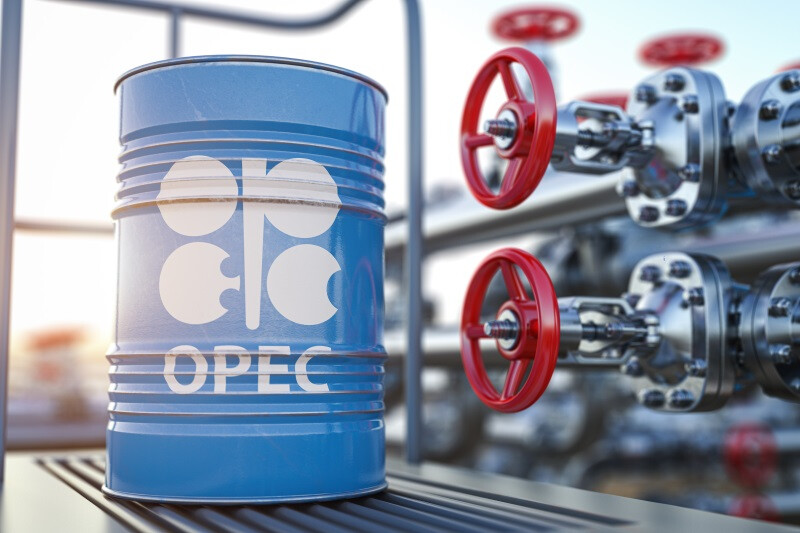
OPEC+’s Prolonged Production Cuts and Rising Demand Tighten Global Oil Market

The global oil market is poised to remain tight in 2025, despite OPEC+’s decision to extend its voluntary production cuts by an additional three months. The International Energy Agency (IEA) has raised its global oil demand growth forecast for 2025 to 1.1 million barrels per day (bpd), driven by robust demand from Asian markets.   

While OPEC+’s production cuts aim to stabilize the market, the IEA cautions that overproduction from some members and strong supply growth from non-OPEC+ countries could still lead to a surplus. However, the IEA predicts that the market will remain comfortably supplied.   

Key Takeaways:

Strong Demand Growth: Global oil demand is projected to reach 103.9 million bpd in 2025, driven by rising demand from Asian economies.   

OPEC+ Production Cuts: The extension of OPEC+’s voluntary production cuts to September 2026 will help to tighten the market and support prices.
Non-OPEC+ Supply Growth: Non-OPEC+ countries, particularly the US, Brazil, Canada, Guyana, and Argentina, are expected to contribute significantly to global oil supply growth.
Saudi Arabia’s Jafurah Gas Project: The start-up of this project will boost Saudi Arabia’s natural gas liquid supply, indirectly impacting oil production.

Market Outlook:

While the oil market is expected to remain relatively balanced in 2025, several factors could influence future price trends:

Geopolitical Risks: Geopolitical tensions, particularly in the Middle East, could disrupt oil supplies and lead to price volatility.   

Economic Slowdown: A global economic slowdown could reduce oil demand and put downward pressure on prices.   

Renewables and Energy Transition: The increasing adoption of renewable energy sources could impact long-term oil demand.
As the global energy landscape continues to evolve, it is crucial to monitor these factors to assess their potential impact on the oil market.

[Copyright (c) Global Economic Times. All Rights Reserved.]

  • #globaleconomictimes
  • #koyongchul
  • #cherrylee
  • #seoulkorea
  • #periodicoeconomico
  • #글로벌이코노믹타임즈
  • #GET
  • #GETtv
  • #liderdel
Pedro Espinola Special Correspondent

Popular articles

  • A New Era in The Hague: Rob Jetten Sworn In as Netherlands’ Youngest and First Openly Gay Prime Minister

  • Mexico on Edge: ‘King of Cocaine’ El Mencho Killed, Igniting Wave of Cartel Retaliation

  • The "Chicken-Sized" Dino: 900g Fossil Overturns Evolution Theory

I like it
Share
  • Facebook
  • X
  • Kakaotalk
  • LINE
  • BAND
  • NAVER
  • https://www.globaleconomictimes.kr/article/1065586887110223 Copy URL copied.
Comments >

Comments 0

Weekly Hot Issue

  • Coway Clinches Top Honor at "Water Taste Awards" for 7th Consecutive Year
  • HP Targets Korea as Strategic Hub for 'Edge AI' Expansion, Seeking Startup Partnerships
  • Pearl Abyss’s 'Crimson Desert' Shatters Records with 2 Million Copies Sold on Day One
  • "BTS Over Books?" Indian Academies Issue Emergency Notices as Students Plot Mass Absences for Comeback Live
  • Naver to Shut Down Men's Fashion Service 'MR.' to Launch Expanded AI-Driven Fashion Platform
  • JBNU and SKKU Researchers Achieve Breakthrough in "Dream Material" MXene, Setting New World Records in Performance

Most Viewed

1
An Open Letter to BTS On the Eve of a Historic Performance
2
From Industrial Capital to Tourism Mecca... Ulsan Makes a Bold Move with ‘Experiential Content’ in 2026
3
Ko Sang-goo, President of World Federation of Korean Associations, Elected as First Private Sector Chair of World Korean Community Leaders Convention
4
It is Time for BTS’s Fandom, ARMY, to Step Forward
5
Korean Stock Market Plunges: Circuit Breaker and Sidecar Triggered Amid Geopolitical Crisis
광고문의
임시1
임시3
임시2

Hot Issue

Vishay Unveils Ultra-Compact 0404 RGB LED with Independent Chip Control for Enhanced Color Precision

Coway Clinches Top Honor at "Water Taste Awards" for 7th Consecutive Year

AI Medical Ecosystem in Focus: KIMES 2026 Opens in Seoul as Global Healthcare Hub

Netanyahu Declares Decisive Blow to Iran’s Nuclear and Missile Programs, Signals Early End to War

Let’s recycle the old blankets in Jeju Island’s closet instead of incinerating them.

Global Economic Times
korocamia@naver.com
CEO : LEE YEON-SIL
Publisher : KO YONG-CHUL
Registration number : Seoul, A55681
Registration Date : 2024-10-24
Youth Protection Manager: KO YONG-CHUL
Singapore Headquarters
5A Woodlands Road #11-34 The Tennery. S'677728
Korean Branch
Phone : +82(0)10 4724 5264
#304, 6 Nonhyeon-ro 111-gil, Gangnam-gu, Seoul
Copyright © Global Economic Times All Rights Reserved
  • 에이펙2025
  • APEC2025가이드북TV
  • 독도는우리땅
Search
Category
  • All articles
  • Synthesis
  • World
  • Business
  • Industry
  • ICT
  • Distribution Economy
  • Well+Being
  • Travel
  • Eco-News
  • Education
  • Korean Wave News
  • Opinion
  • Arts&Culture
  • Sports
  • People & Life 
    • 전체
    • International Student Report
    • With Ambassador
  • Column 
    • 전체
    • Cho Kijo Column
    • Cherry Garden Story
    • Ko Yong-chul Column
    • Kim Seul-Ong Column
    • Lee Yeon-sil Column
  • Photo News
  • New Book Guide
  • Multicultural News
  • Jobs & Workers