• 2025.12.13 (Sat)
  • All articles
  • LOGIN
  • JOIN
Global Economic Times
APEC2025KOREA가이드북
  • Synthesis
  • World
  • Business
  • Industry
  • ICT
  • Distribution Economy
  • Well+Being
  • Travel
  • Eco-News
  • Education
  • Korean Wave News
  • Opinion
  • Arts&Culture
  • Sports
  • People & Life
  • Column
    • Cho Kijo Column
    • Lee Yeon-sil Column
    • Ko Yong-chul Column
    • Cherry Garden Story
  • Photo News
  • New Book Guide
MENU
 
Home > People & Life

South Korea's Birthrate Sees First Increase in Nine Years

KO YONG-CHUL Reporter / Updated : 2025-01-06 13:33:39
  • -
  • +
  • Print


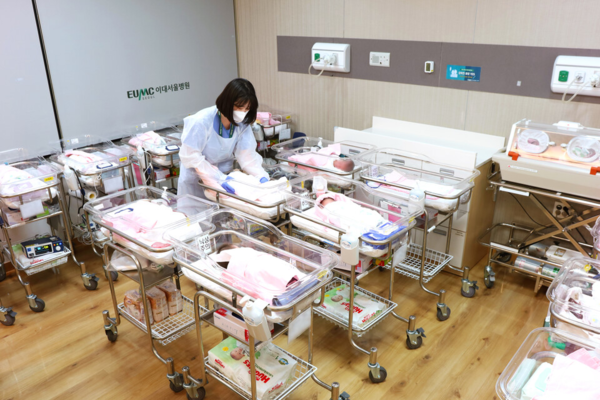
Seoul, South Korea – South Korea's birthrate has unexpectedly rebounded, marking the first increase in nine years, according to the Ministry of the Interior and Safety's 2024 resident registration population statistics released on Wednesday.

The number of newborns registered last year reached 242,334, a 3.1% increase compared to the previous year's 235,039. This uptick comes after a prolonged decline since 2016, when the birthrate peaked at 411,859.

Despite the positive news, the country continues to grapple with an aging population. The number of deaths also increased to 360,757 in 2024. While the natural decrease in population due to births and deaths persisted, the rate of decline slightly slowed down compared to the previous year.

A significant demographic shift has occurred, with the elderly population surpassing the younger generation. The number of people aged 70 and over has exceeded that of those in their 30s, and similarly, the 60+ age group now outnumbers the 40+ cohort.

The aging population trend is further evident in the breakdown of the resident registration population by age group. Individuals in their 50s constituted the largest segment, followed by those in their 60s, 40s, 70s and over, 30s, 20s, 10s, and those under 10 years old.

The number of children and working-age adults decreased, while the elderly population continued to grow. This demographic shift has profound implications for the country's social security system and labor market.

The regional disparity between the metropolitan and non-metropolitan areas has also widened. The population in the metropolitan area, which includes Seoul, Incheon, and Gyeonggi-do, reached 26,047,523 in 2024, accounting for over half of the total population. This marks a significant increase in the population gap between the metropolitan and non-metropolitan areas.

The unexpected rise in the birthrate offers a glimmer of hope amidst broader demographic challenges. However, experts caution that it is too early to determine whether this trend will continue. Addressing the underlying factors contributing to the low birthrate and aging population remains a pressing issue for the South Korean government.

[Copyright (c) Global Economic Times. All Rights Reserved.]

  • #globaleconomictimes
  • #seoulkorea
  • #periodicoeconomico
  • #글로벌이코노믹타임즈
  • #GET
  • #GETtv
  • #대한민국
  • #중기청
  • #재외동포청
  • #외교부
  • #micorea
  • #my
KO YONG-CHUL Reporter
Reporter Page

Popular articles

  • A Garden Where the City's Rhythm Stops: Dongdaemun's 'Cherry Garden', Cooking Consideration and Diversity

  • Dayone Company Achieves Record Performance in Adult Education Market

  • Choi Bun-do, Chairman of PTV Group, Assumes Presidency of the Korean Chamber of Commerce and Industry in South Central Vietnam

I like it
Share
  • Facebook
  • X
  • Kakaotalk
  • LINE
  • BAND
  • NAVER
  • https://www.globaleconomictimes.kr/article/1065587525347260 Copy URL copied.
Comments >

Comments 0

Weekly Hot Issue

  • International Organizations Raise China's Growth Forecasts, Citing Stimulus and Exports
  • US-Japan Counteract Sino-Russian Drills with Joint Bomber Exercise in East Sea Airspace
  • Thailand-Cambodia Conflict Escalates: 22 Dead, Over 100 Injured as Border Clashes Spread
  • Swiss Economy Minister Guy Parmelin Poised to Lead as President in 2026
  • Russia Claims Downing Record 278 Ukrainian Drones Overnight, 40 Targeting Moscow Region
  • ZTE Faces Massive US Fine Over Alleged Foreign Bribery; Potential Settlement Could Exceed $2 Billion

Most Viewed

1
A Garden Where the City's Rhythm Stops: Dongdaemun's 'Cherry Garden', Cooking Consideration and Diversity
2
The Sudden Halt of Ayumi Hamasaki's Shanghai Concert: Unpacking the Rising Sino-Japanese Tensions
3
Choi Bun-do, Chairman of PTV Group, Assumes Presidency of the Korean Chamber of Commerce and Industry in South Central Vietnam
4
The Paradox of the 'Juvenile Offender' (Chokbeop Sonyeon): Impunity or Unfinished Rehabilitation?
5
South Korea Unveils 'K-Med': A Gigantic leap in Medical AI, Challenging Global Tech Giants
광고문의
임시1
임시3
임시2

Hot Issue

Mexico Hikes Tariffs on 'Strategic Goods' from South Korea, China, and Other Non-FTA Nations

Tech Tensions Flare: DeepSeek Allegedly Smuggles Banned NVIDIA Blackwell Chips for New AI Model

Netflix Stock Plummets 10% on Credit Downgrade Fears Following Blockbuster Warner Bros. Acquisition

LG Innotek Develops Eco-Friendly Next-Gen Smart IC Substrate, Reducing Carbon Emissions by Half

Let’s recycle the old blankets in Jeju Island’s closet instead of incinerating them.

Global Economic Times
korocamia@naver.com
CEO : LEE YEON-SIL
Publisher : KO YONG-CHUL
Registration number : Seoul, A55681
Registration Date : 2024-10-24
Youth Protection Manager: KO YONG-CHUL
Singapore Headquarters
5A Woodlands Road #11-34 The Tennery. S'677728
Korean Branch
Phone : +82(0)10 4724 5264
#304, 6 Nonhyeon-ro 111-gil, Gangnam-gu, Seoul
Copyright © Global Economic Times All Rights Reserved
  • 에이펙2025
  • APEC2025가이드북TV
  • 독도는우리땅
Search
Category
  • All articles
  • Synthesis
  • World
  • Business
  • Industry
  • ICT
  • Distribution Economy
  • Well+Being
  • Travel
  • Eco-News
  • Education
  • Korean Wave News
  • Opinion
  • Arts&Culture
  • Sports
  • People & Life
  • Column 
    • 전체
    • Cho Kijo Column
    • Lee Yeon-sil Column
    • Ko Yong-chul Column
    • Cherry Garden Story
  • Photo News
  • New Book Guide
  • Multicultural News
  • Jobs & Workers