![[등록] 2026-09-01 15:48:31](/support/_updata/banner2/tl181982910_6749.png)


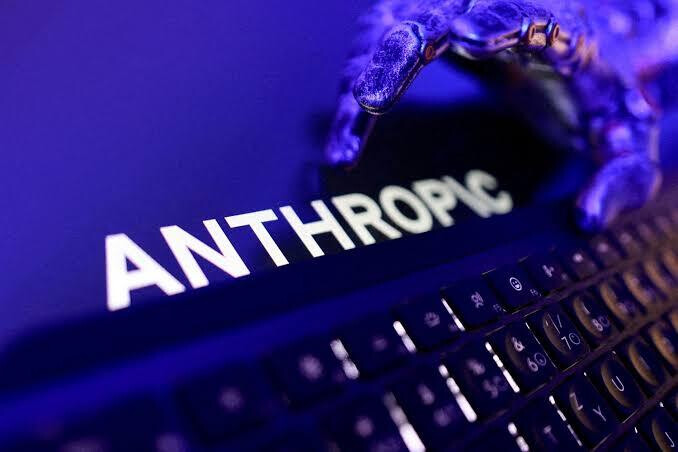
As artificial intelligence (AI) spreads rapidly, lawsuits regarding the unauthorized use of copyrighted works for AI model training continue to surge worldwide. As the competition for AI performance intensifies, conflict is deepening between companies seeking high-quality data not available online and creators demanding fair compensation.
According to Seoul Economic Daily reporting on the 15th, at least 15 overseas-published works by Korean authors—including Han Kang, Hwang Sok-yong, and Shin Kyung-sook—are listed as eligible for settlement on the "Anthropic Copyright Settlement Site."
This is connected to Bartlett v. Anthropic, widely regarded as a monumental trial in the field of AI copyright. In August 2024, three authors, including Andrea Bartlett, filed a lawsuit against Anthropic, alleging that the company used digital pirate books without authorization from digital shadow libraries like Library Genesis for AI training.
During the trial, Anthropic's clever tactics to train on book data were fully exposed. Around 2021–2022, Anthropic downloaded millions of books from digital pirate libraries.
As the controversy grew, Anthropic changed strategy in 2024, beginning to purchase physical books in bulk from second-hand bookstores and publishing distributors worldwide. Anthropic internally dubbed this physical book acquisition project "Project Panama" and formulated a plan to "destructively scan every book in the world."
Documents drafted by Anthropic in 2024 show that Woongjin Booksen, South Korea's largest book distributor, was selected as a Korean book distribution partner to proceed with book sales contracts. The memo included, "Currently [books are] mainly brought in from the U.S. and U.K., with plans to order from Taiwan, Japan, and Korea soon."
Despite this situation, South Korea lacks regulations regarding the sale of books by distributors to AI companies. According to Article 20 of the Copyright Act, the "distribution right" of a copyright holder is exhausted for books that have been lawfully sold for the first time with the copyright holder's consent.
Creators are pushing back. As AI advances, its output has reached a level of sophistication incomparable to human work, posing a direct threat. They argue that it is unfair for AI companies to threaten the creative ecosystem through unauthorized content training. Furthermore, pointing out that rare and antique books are utilized for AI training for corporate profit and then discarded, they emphasize that this damages the assets of the human community.
Courts around the world have delivered mixed rulings. The U.S. District Court for the Northern District of California, which handled the Bartlett v. Anthropic case, partially ruled in favor of Anthropic in July. The court distinguished between cases where Anthropic trained on legally purchased books and cases where it downloaded digital pirated copies. It ruled that legally purchased books constituted "fair use" because the book contents were transformed through AI training, thus not violating copyright. However, it concluded that pirated copies infringed copyright based on the copying act itself, independent of AI utilization. Consequently, Anthropic agreed to pay a total of $1.5 billion (approx. 2.2 trillion KRW) covering about 500,000 downloaded pirated books. Korean authors, including Han Kang, are included in the list eligible for this settlement payout. Anthropic plans to disburse the settlement funds to the copyright holders starting on the 15th of next month.
On the other hand, on September 29, the U.S. Court of Appeals for the Third Circuit recognized Thomson Reuters' copyright in a lawsuit filed against AI-based legal startup Ross Intelligence for using its legal service's precedent summary data for AI training.
Europe offers broader copyright protection. In July, the Munich Regional Court in Germany ruled in favor of the German musical copyright collective GEMA in a lawsuit against music AI Suno. The court judged that the similarity of the songs created by AI was "too extensive and specific to be a coincidence."
The EU has been enforcing the AI Act since August of this year. It strictly protects copyrights compared to the U.S. by granting limited training exemptions only for specific purposes explicitly stated in the law (such as research, criticism, and reporting). If rights holders, such as authors, express their refusal, their works cannot be used for AI training. Germany maintains the strictest standard regarding AI copyright, heavily regulating the act of content "memorization" inside AI models.
The U.S., an AI powerhouse, remains embroiled in copyright litigation. The New York Times is suing OpenAI and Microsoft for training on millions of articles without permission. While ruling in favor of Meta in a copyright infringement lawsuit, U.S. District Judge Vince Chhabria of the Northern District of California noted that "if plaintiffs can more robustly prove the harm AI inflicts on existing copyright markets, plaintiffs could win in other cases."
[Copyright (c) Global Economic Times. All Rights Reserved.]