

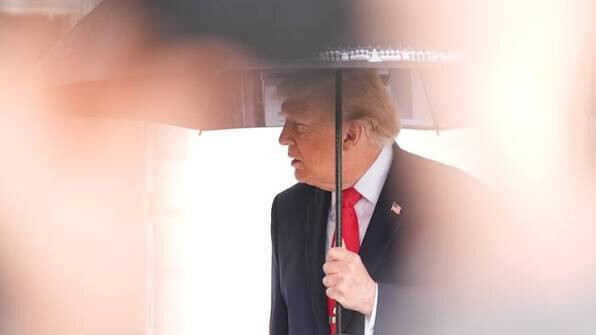
US President Donald Trump departed on November 16 for an Asian tour to attend the ASEAN (Association of Southeast Asian Nations) summit in Manila, Philippines, and the APEC (Asia-Pacific Economic Cooperation) summit in Shenzhen, China. This marks his first diplomatic appearance since the crushing defeat in the midterm elections on the 3rd. When asked that day whether the midterm loss would diminish his influence abroad, he replied, "No."
Historically, US presidents who have suffered electoral defeats turn to the broad discretion of the foreign policy arena to bolster their political standing and build a notable legacy. There is a prevailing outlook that the remainder of Trump's term will be no exception.
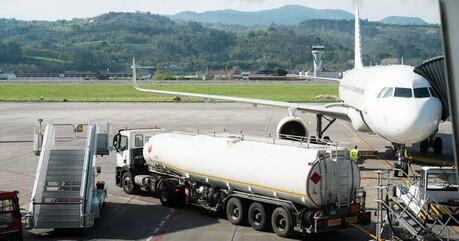
Trump’s tour unfolds amidst a turbulent backdrop: his core MAGA (Make America Great Again) support base is unsettled by the midterms, and the Democratic Party—set to take the majority in both the House and Senate starting this coming January—is gearing up for various investigations. These domestic headwinds are compounded by negative news, including the extramarital scandal surrounding former Nvidia CEO Jensen Huang and nationwide ground stops for commercial flights.
The highlights of the tour are expected to be the US-China summit with Chinese President Xi Jinping on the 19th, as well as the first-ever trilateral US-China-Russia summit involving President Xi and Russian President Vladimir Putin. Regarding the three-way meeting, Trump stated, "We will talk about denuclearization, the issues of Iran and Ukraine, and more." He also hinted at the possibility of a surprise US-North Korea summit, saying, "I might meet Kim Jong-un in China" and "It's up to President Xi."
Regarding negotiations to end the war in Ukraine, Trump remarked, "I think [Putin] is backing off a little bit," adding, "The situation may have become more difficult for him [from Russia’s perspective]. He could get a lot tougher, but I think he’s backing off." Ukraine and its European allies worry that this summit could turn out to be a modern-day "Yalta Conference"—reminiscent of post-WWII secret deliberations among major powers like the US, UK, and Soviet Union to reshape the world order and spheres of influence.
There are also concerns that Korean Peninsula security issues, including North Korea’s nuclear and missile programs, could be discussed in South Korea’s absence. However, contrary to Trump’s assertions, deep-seated differences between Ukraine and Russia remain difficult to bridge, leading some analysts to predict that the summit will struggle to yield remarkable breakthroughs. Following this tour, the G20 summit is scheduled to be held in Miami, Florida, on December 14–15.
If Trump, known for favoring top-down diplomacy, relies on improvisational foreign affairs to offset his election debacle, it risks injecting further uncertainty into the international arena. The Associated Press noted, "President Trump may feel more comfortable with foreign leaders than with his fracturing political coalition at home," while warning that "his remarks and actions at the summits are now increasingly likely to face scrutiny and oversight during congressional hearings upon his return to Washington."
Ed Kagan, a career diplomat who served as the US ambassador to Malaysia under the Biden administration, told the AP that flashy pomp and diplomatic protocol are "a way to start changing the narrative and reminding people that the president is still the president."
[Copyright (c) Global Economic Times. All Rights Reserved.]